In today’s digital era, technology has transformed countless aspects of daily life, and accessibility tools for visually impaired individuals stand as a shining example of innovation making the world more inclusive. Whether it's navigating public spaces, accessing information, or communicating effectively, these tools empower individuals to live independently and engage fully in modern society. Let’s… Continue reading Tools for Visually Impaired People: Empowering Accessibility Through Technology
Back to basics – What is Automatic Speech Recognition
Automatic Speech Recognition (ASR) technology refers to the process of converting spoken language into text using computer algorithms. ASR systems can interpret and transcribe human speech, enabling computers to understand and respond to voice commands and spoken inputs. How Does ASR Work?At its core, ASR involves several key processes: Audio Signal Processing: The system captures… Continue reading Back to basics – What is Automatic Speech Recognition

Back to basics – What is a text to speech technology?
Text-to-Speech technologies are methods of converting written text into spoken words. TTS systems use a combination of natural language processing, speech synthesis, and voice modeling to generate spoken speech from written text. There are several popular platforms for text-to-speech, including: Google Text-to-Speech: a free service available on Android devices. Amazon Polly: a service offered… Continue reading Back to basics – What is a text to speech technology?
Back to basics – What is Natural Language Processing ?
Back to basics – What is Natural Language Processing (NLP)? NLP is a subfield of artificial intelligence that deals with the interaction between computers and human languages. NLP techniques are used to analyze and understand human language, and can be used for a wide range of tasks such as: Text classification: Automatic categorization of text… Continue reading Back to basics – What is Natural Language Processing ?
Back to basics – What are language technologies?
Language technologies are a set of computer-based tools and techniques that are used to process, understand, and generate human language. Some examples of language technologies include: 1. Natural Language Processing (NLP) This is a subfield of artificial intelligence that deals with the interaction between computers and human languages. NLP techniques are used to analyze and… Continue reading Back to basics – What are language technologies?
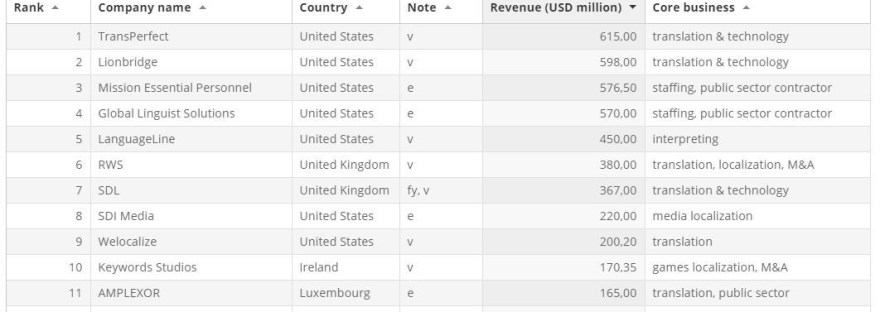
World largest language services providers
There are both pros and cons to searching for and considering the largest companies in the world for language services. Some potential pros include: Size. Larger companies may have more resources, including financial resources and a larger pool of language experts, which could potentially translate into a higher level of quality. Reputation. Big companies may… Continue reading World largest language services providers
Best employers – Localization Awards
There are several advantages to looking for companies that have been recognized as "best employers" through awards or other recognition programs: Reputation. Companies that have received awards or recognition as "best employers" are likely to have a good reputation in the industry, which can be beneficial for employees who want to work for a respected… Continue reading Best employers – Localization Awards
Grammarly, check your spell
Grammarly is a writing and editing tool that helps users improve their grammar, spelling, and writing style. It is designed to catch mistakes and provide suggestions for improvement, making it easier for users to produce high-quality written work. To use Grammarly, you can either install the Grammarly browser extension, which will check your writing in… Continue reading Grammarly, check your spell
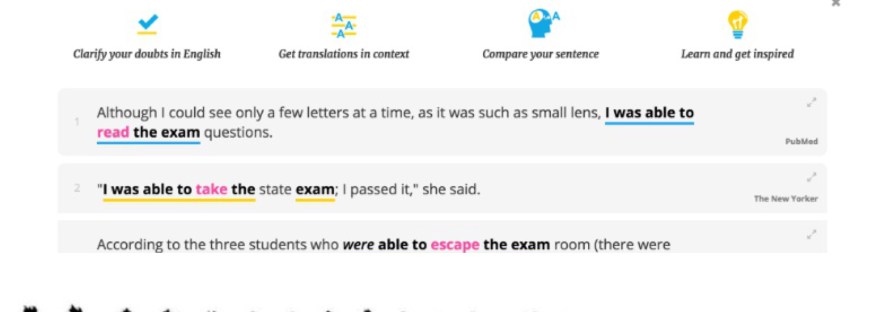
Enhance Your English Writing with Ludwig Guru: Near-Perfect Assistance at Your Fingertips
Google’s little cousin specialized in computational linguistics.
Ask Ludwig Guru and you’ll write in perfect English, or almost…
Google’s little cousin specialized in computational linguistics.
 People's Code